
The Best Fall Protection Is Preventing the Fall in the First Place
Harnesses, lanyards, and self-retracting lifelines save lives every day. But when a fall hazard can be eliminated or controlled with a passive system, workers are protected before a fall can happen.
Safety starts with prevention. The goal of a strong fall protection plan is not only to arrest a fall after it occurs, but to remove or control the hazard whenever possible. Portable guardrail systems help create a physical barrier between workers and the edge, making them one of the most effective forms of passive fall prevention.
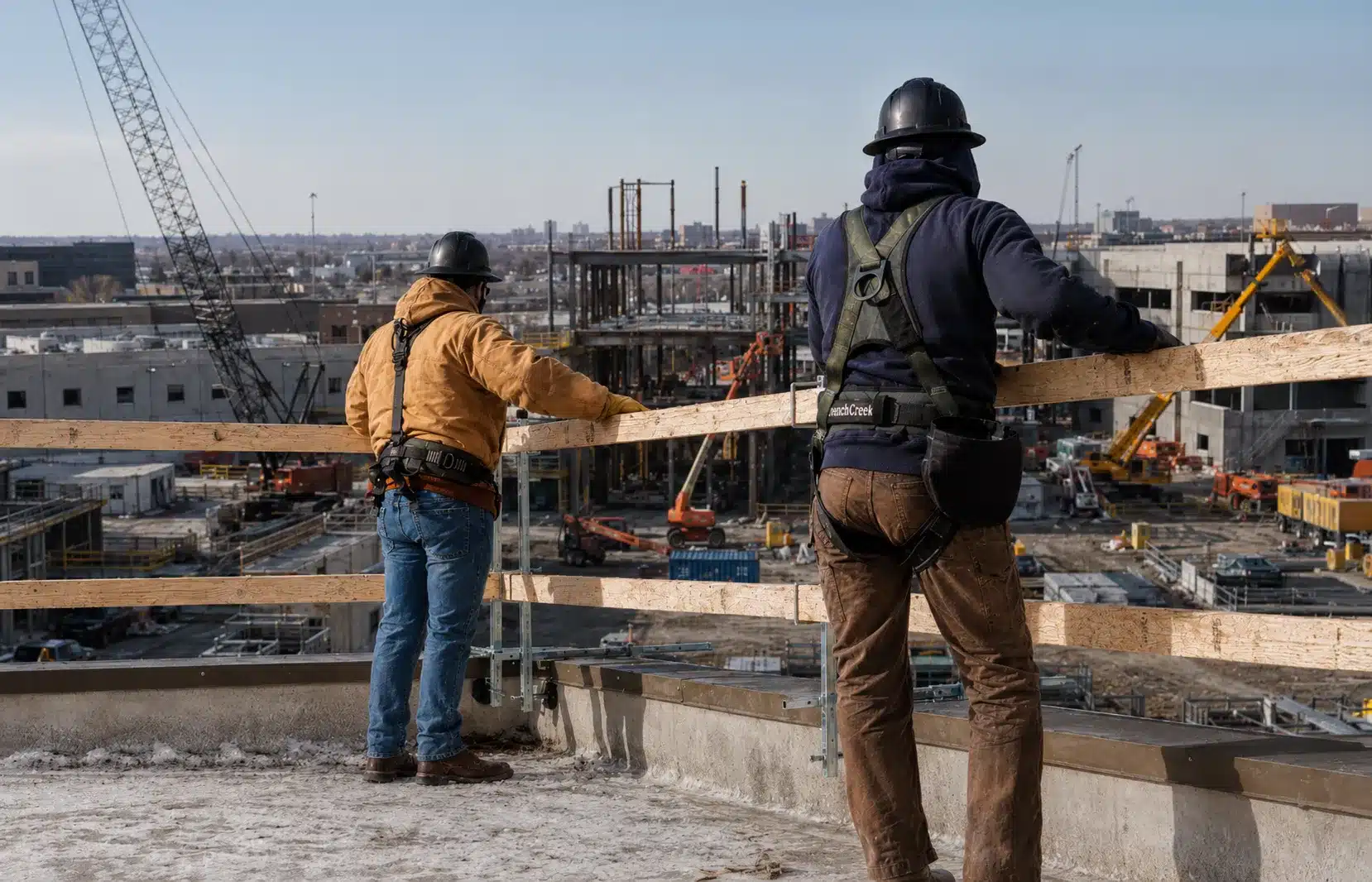
The Best Fall Protection Starts Before PPE
When most people think about fall protection, they think about harnesses, lanyards, self-retracting lifelines, anchor points, and personal fall arrest systems. These products are critical in many work-at-height applications, and they save lives every day.
But the safest fall protection strategy is not always about stopping a fall after it happens. Whenever possible, the better solution is to prevent the fall from being possible in the first place.
It may sound strange coming from a fall protection manufacturer, but our first recommendation is not always a harness, SRL, or lanyard. At FrenchCreek Fall Safety, we believe the first question should be: Can we eliminate or control the hazard before personal protective equipment is needed?
That is where passive fall prevention systems, like guardrails, become so important.
Understanding the Hierarchy of Fall Protection
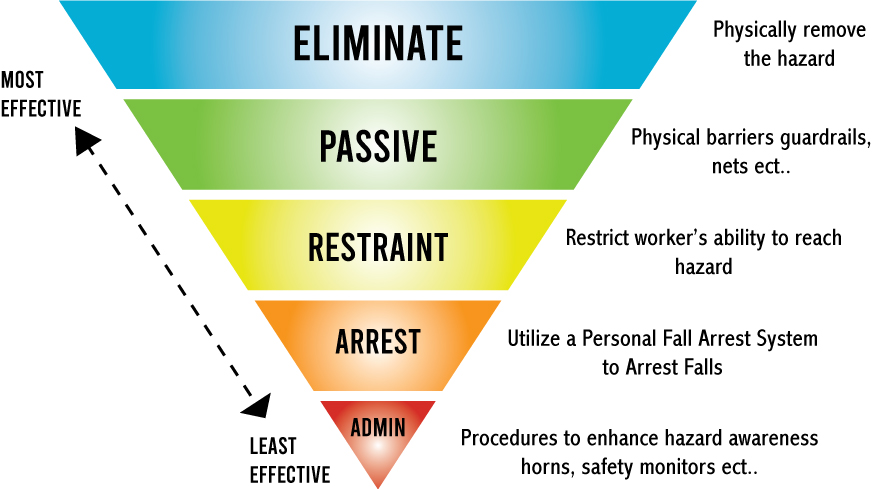
The Hierarchy of Fall Protection ranks fall protection solutions from most effective to least effective. The highest levels focus on eliminating the hazard or separating workers from the hazard before a fall can occur.
In general, the hierarchy moves through these levels:
- Hazard Elimination: Remove the fall hazard entirely whenever possible.
- Passive Fall Protection: Use guardrails, barriers, covers, or nets to protect workers without active engagement.
- Fall Restraint: Use equipment to prevent workers from reaching the fall hazard.
- Fall Arrest: Use equipment to stop a fall after it has already occurred.
- Administrative Controls: Use procedures, warning lines, training, or controlled access areas to reduce exposure.
Harnesses, lanyards, and SRLs are important tools, but they are typically used lower in the hierarchy because they depend on correct worker action. Guardrails sit higher because they provide a physical barrier that works continuously once properly installed.
What Is Passive Fall Protection?
Passive fall protection is a system that protects workers without requiring them to take direct action. A properly installed guardrail system, for example, creates a physical barrier between the worker and the fall hazard.
Unlike active fall protection, passive systems do not require a worker to inspect a harness, connect a lanyard, calculate fall clearance, or locate a suitable anchor point before being protected. The protection is already in place.
This is one of the biggest advantages of guardrail systems. They help protect everyone working in the area, not just the worker wearing fall protection equipment.
Guardrails vs. Harnesses, SRLs, and Lanyards
Harnesses, self-retracting lifelines, and lanyards are essential when passive protection is not practical. In many applications, they are the correct solution.
However, these systems depend on proper use every time. Workers must be trained, equipment must be inspected, anchor points must be selected correctly, and the system must be connected before exposure to the hazard.
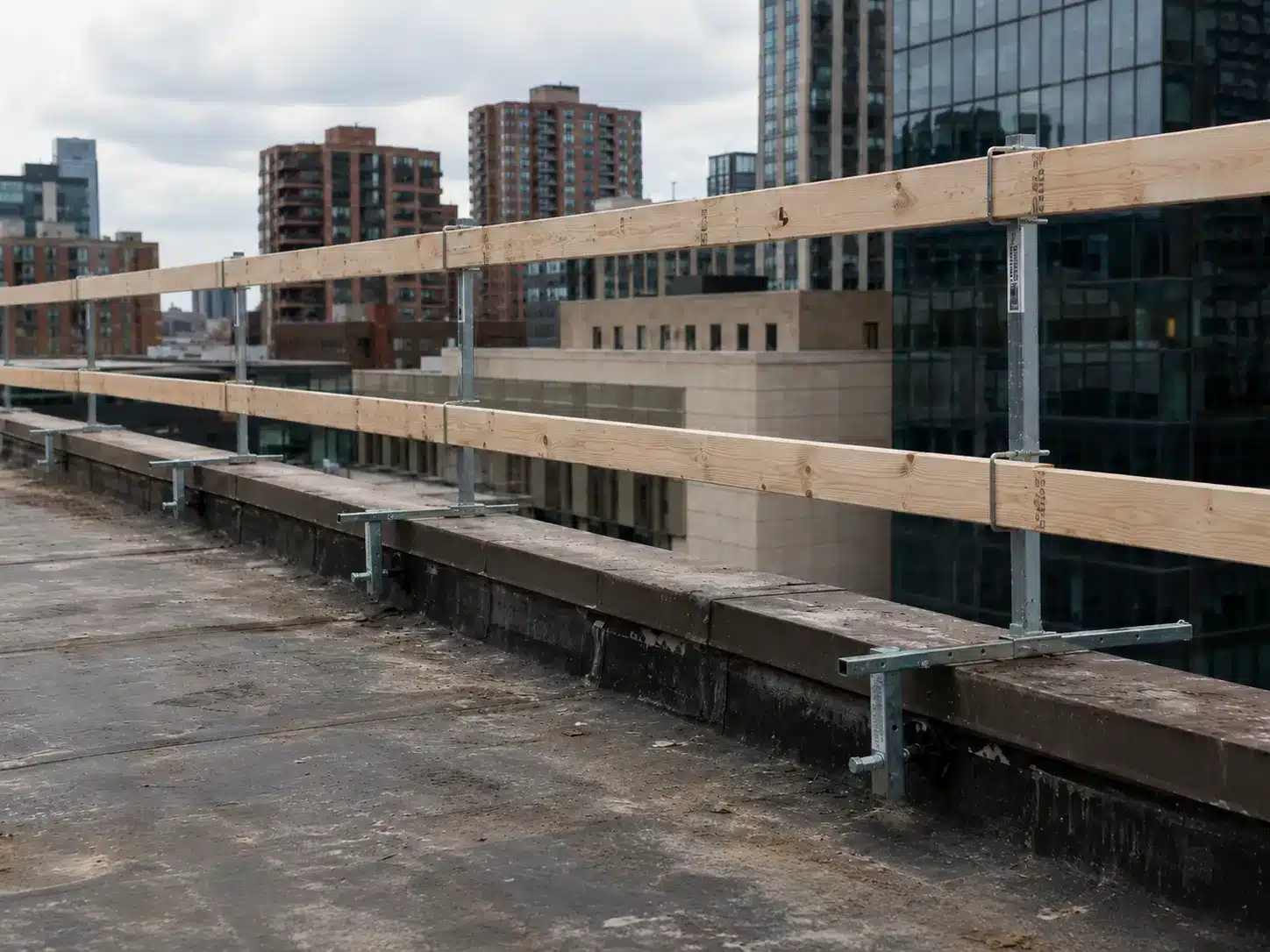
A guardrail system changes the equation. Instead of planning to arrest a fall, a guardrail helps prevent the worker from reaching the fall hazard at all.
That is why guardrails are often one of the smartest choices for rooftops, parapet walls, concrete slab edges, and other elevated work areas where a physical barrier can be installed.
The GR200 Portable Guardrail System
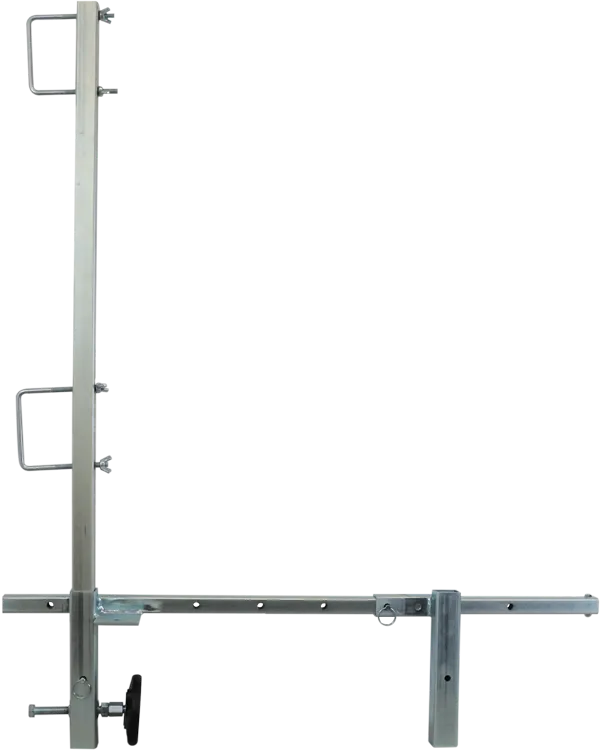
The FrenchCreek GR200 Portable Guardrail System is designed to provide passive fall prevention for parapet walls and concrete slab edges.
By creating a secure perimeter around elevated work areas, the GR200 helps crews work near edges with greater confidence and less reliance on active tie-off systems.
Rather than planning for a fall and stopping it after it occurs, the GR200 helps prevent the fall from happening in the first place.
GR200 Features and Benefits
- Fits 4" to 24" parapets and concrete slab edges
- Dual-use versatility for slab edge and parapet installations
- Adjustable clamp lever for secure installation
- Zinc-plated alloy steel construction for corrosion and damage resistance
- Lightweight design for one-person setup and installation
- Designed to meet and exceed applicable OSHA fall protection requirements

Where Portable Guardrails Make Sense
If workers are repeatedly exposed to an edge, rooftop, parapet, or open-sided floor, a passive guardrail system may be one of the most practical solutions available.
Instead of requiring every worker to connect and disconnect throughout the job, a guardrail system establishes a protected work zone. This can improve both safety and productivity while supporting a prevention-first approach to fall protection.
Common applications include:
- Commercial rooftops
- Parapet walls
- Concrete slab edges
- Open-sided floors
- Maintenance areas
- Temporary construction sites
- HVAC and rooftop service work
- Changing jobsite conditions
In other words, guardrails help move the conversation from “How do we stop the fall?” to “How do we prevent the fall from happening?”
Protect Workers Before a Fall Can Happen
Fall arrest equipment will always have an important place in workplace safety. But when a fall hazard can be eliminated, guarded, or controlled with a passive system, that option should be strongly considered first.
The GR200 Portable Guardrail System helps employers take a prevention-first approach by creating a physical barrier between workers and fall hazards.
For rooftops, parapet walls, and concrete slab edges, the GR200 offers a practical way to improve safety, reduce reliance on active PPE, and help prevent falls before they happen.