FC Safety | Fall Protection Guide
The right harness starts with the work.
Two harnesses can meet the same safety requirements and still be built for very different jobs.
Select for the application, attachment points, fit, and work environment first. Then compare price.
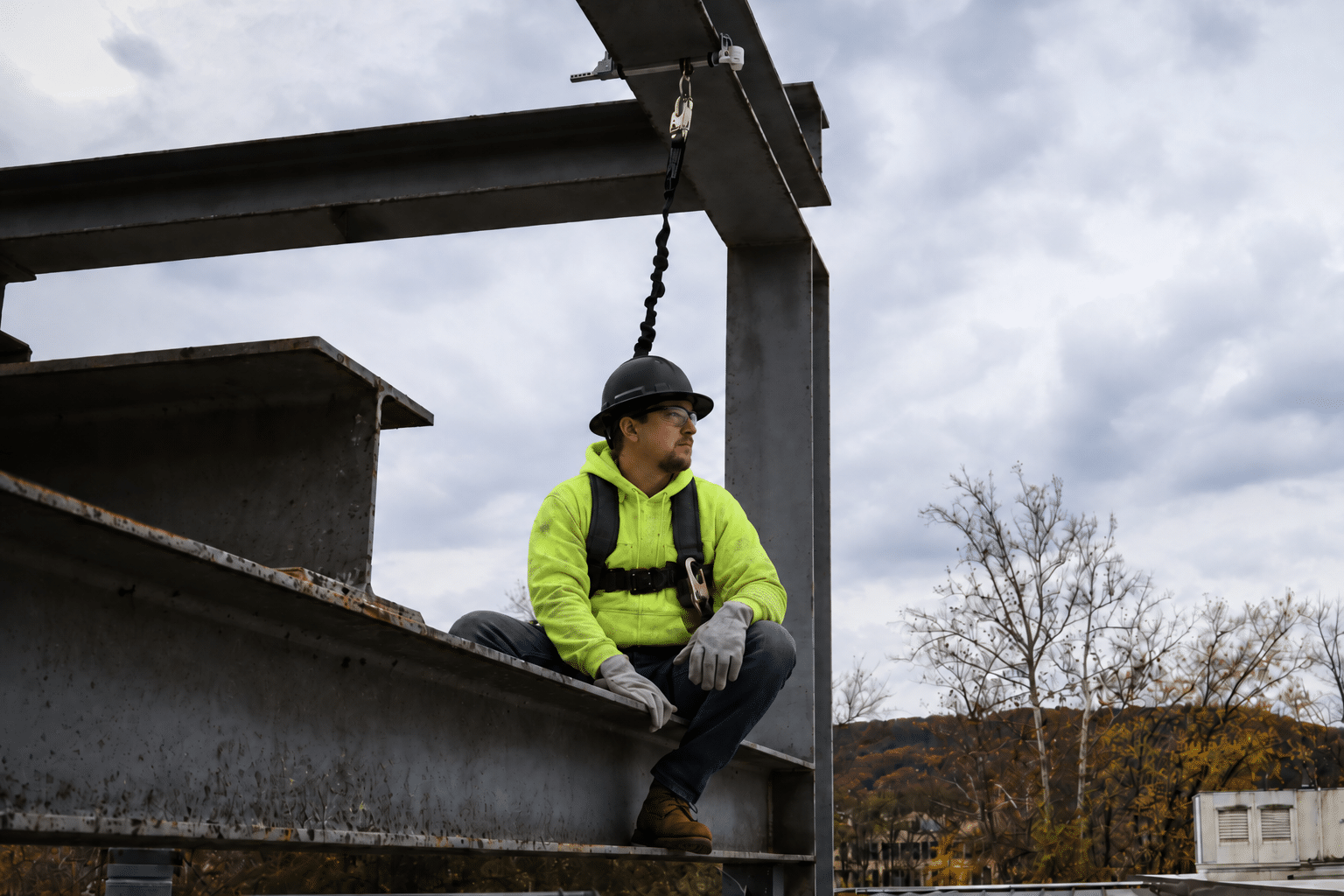
When selecting a full-body harness, price is often one of the first things people compare. That makes sense because cost matters when planning a purchase. But two harnesses can fall within the same price range and meet the same applicable standards while being designed for very different types of work.
The better starting point is the application.
Before comparing prices, ask what the worker will actually be doing, what fall-protection system the harness will connect to, how long the harness will be worn, what attachment points are needed, and what environmental conditions the worker will face.
The goal is not to buy the most expensive harness. It is to choose the harness that provides the right features for the work being performed without paying for features that do not add value to the application.
Start With the Application
Start With the Work Being Performed
“Full-body harness” describes a broad category of fall-protection equipment. Within that category, harnesses can differ significantly in attachment points, buckle styles, padding, adjustability, materials, tool-carrying capability, and overall design.
The first question should be simple:
What will the worker be doing while wearing the harness?
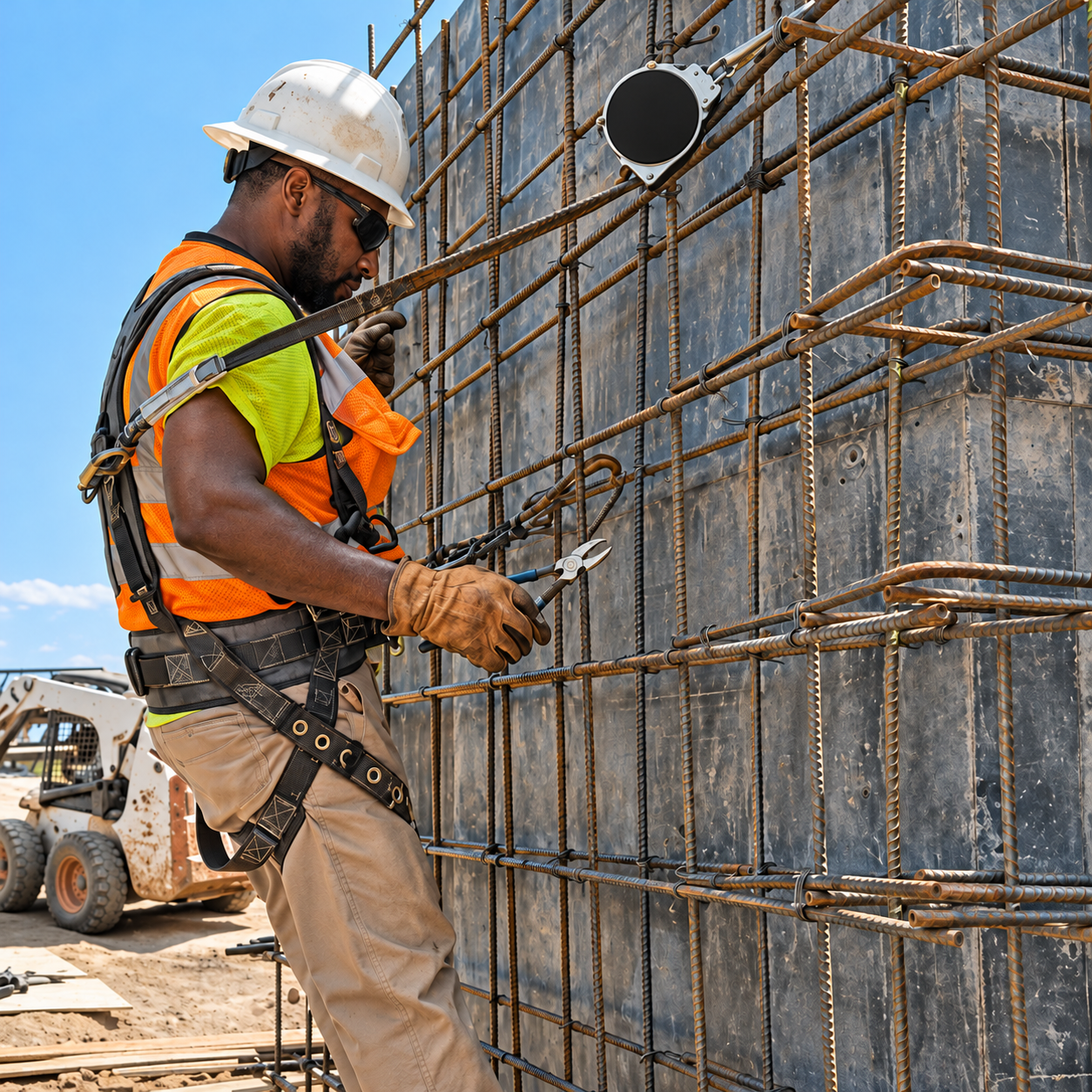
For general fall-arrest applications, the priorities may be relatively straightforward. A worker may need a properly positioned dorsal connection point, reliable adjustment, comfortable fit, and compatibility with the lanyard or self-retracting lifeline being used.
For more specialized work, those requirements can change quickly.
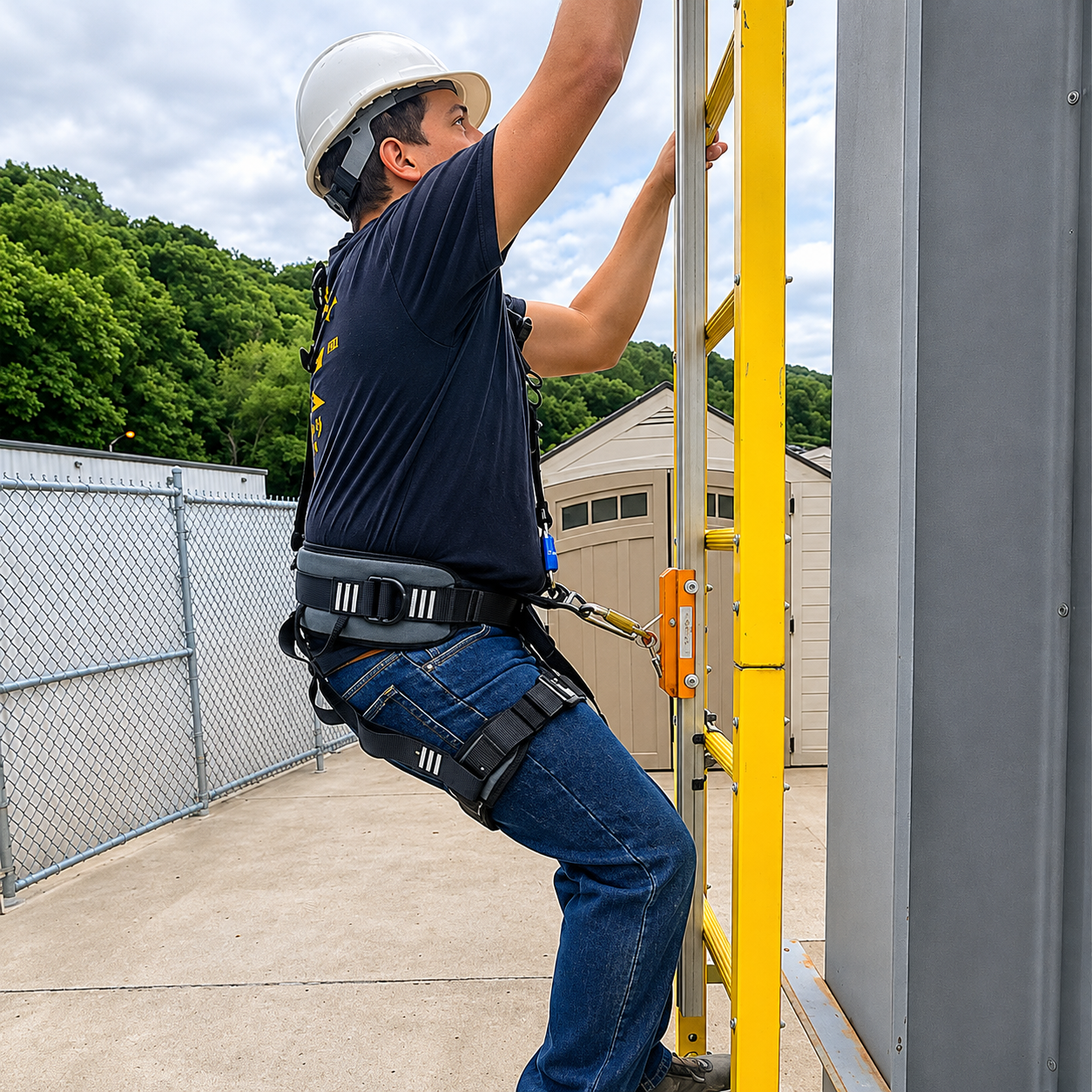
A worker performing positioning tasks may need hip positioning D-rings and additional waist support. A worker climbing a fixed ladder may need a harness that is compatible with the specific vertical climbing system being used. Confined-space work may require appropriate retrieval attachment points and compatibility with a rescue or retrieval system.
Match the Equipment to the Job
Different work. Different harness needs.
Each application places different demands on the harness and on its connection to the rest of the fall-protection system.
General Fall Arrest
Many harness users fall into the general fall-arrest category.
This can include construction, maintenance, elevated work platforms, industrial facilities, and other situations where a worker may be exposed to a fall hazard.
For these applications, selection may focus on:
- A proper dorsal fall-arrest connection
- Comfortable and secure adjustment
- Ease of donning and removal
- Appropriate sizing
- Compatibility with the worker’s connecting device
- Lanyard or SRL-leg management
A worker who only needs general fall-arrest protection may not benefit from every specialty feature available on a more complex harness.
Work Positioning
Work positioning has different requirements than general fall arrest.
Workers in structural steel, tower, utility, or similar applications may need to use a positioning system that allows them to work with their hands free while supported at the work location.
Harnesses designed for these applications may include hip positioning D-rings and more substantial waist support.
Positioning attachment points and fall-arrest attachment points serve different purposes. Hip positioning D-rings are not intended as primary fall-arrest attachment points. Use each connection only for its designated purpose and according to the harness and system manufacturers’ instructions.
If positioning is part of the job, that requirement should be identified before selecting the harness.
Climbing and Vertical Systems
Workers using fixed ladders, towers, and vertical climbing systems may have another set of requirements.
Harness selection can depend on the climbing system being used and the connection point required by that system. Mobility also becomes especially important because the worker may be climbing continuously rather than simply working from a stationary elevated location.
Before selecting a harness for a vertical climbing system, confirm that the harness, the required attachment location, and the climbing device are all compatible. A frontal or sternal connection should be used only where the specific system and applicable requirements allow it.
A harness should not be selected simply because it has more connection points. The important question is whether it has the correct connection points for the work being performed.
Confined Space and Rescue
Confined-space applications can introduce retrieval and rescue requirements that may not exist in general construction applications.
Depending on the system and rescue plan, the harness may need attachment points intended for retrieval equipment. Some systems use paired shoulder retrieval attachments with a spreader assembly; others require a different approved arrangement.
Selection must follow the retrieval plan, manufacturer instructions, and applicable requirements, while allowing movement in restricted spaces.
Harness selection should therefore be part of the overall confined-space and rescue planning process rather than treated as an isolated purchase.
Material and Environmental Suitability
Specialty Work Environments
Some work environments require additional consideration because of heat, electrical hazards, welding operations, moisture, corrosive conditions, or other environmental factors.
In these situations, harness material and hardware selection can become just as important as the overall harness style.
Before choosing a harness, consider whether the worker will be exposed to:
- Welding or hot work
- Electrical hazards
- Moisture
- Corrosive conditions
- Dirt and abrasive materials
- Outdoor weather
- Frequent climbing
- Confined spaces
- High-heat environments
Specialty applications may require different webbing, hardware, or harness designs. Verify the exact equipment’s suitability for heat, electrical exposure, chemicals, or other hazards; do not assume a standard harness is suitable for every environment.
Attachment Compatibility
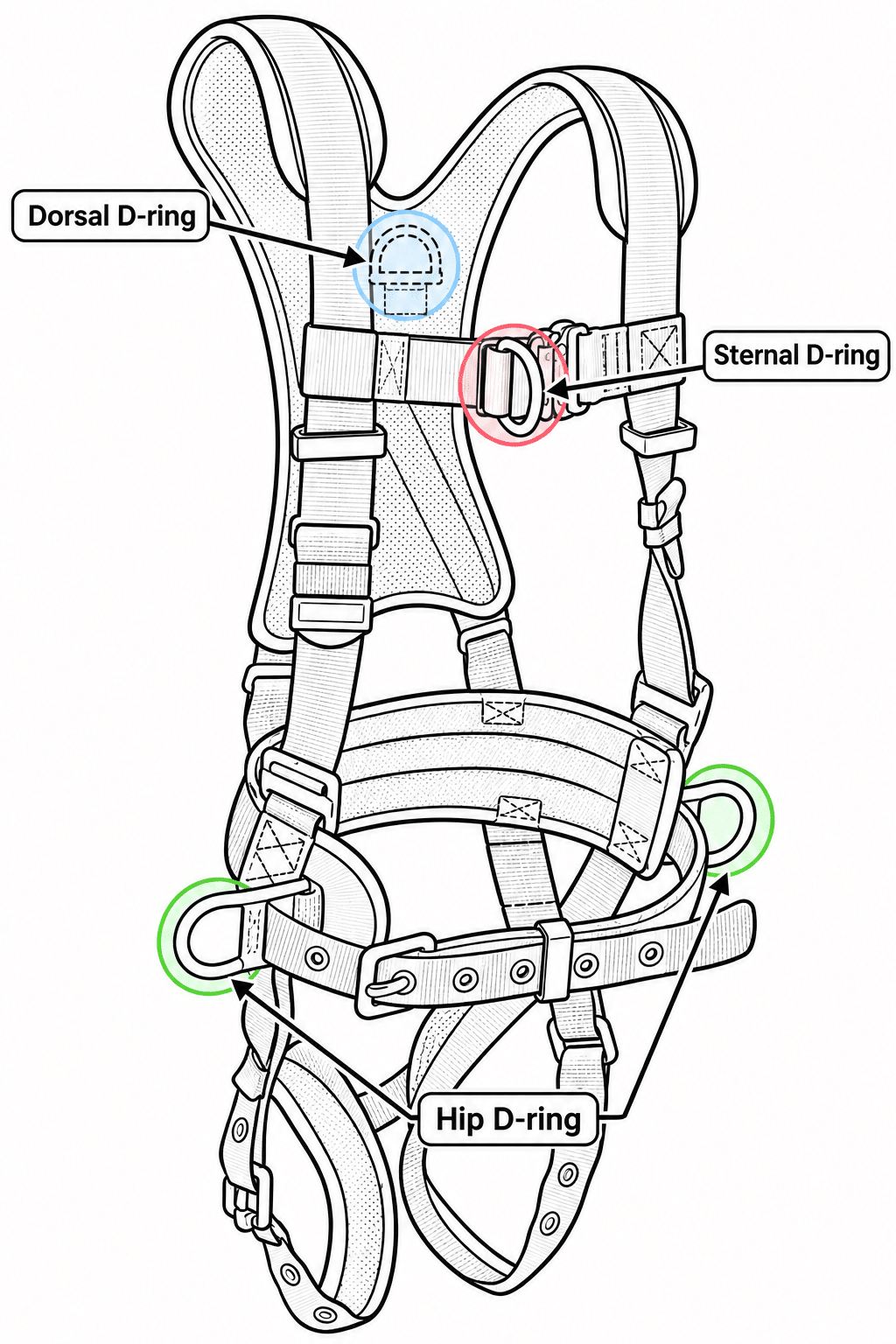
Choose the Right D-Ring Locations
D-ring location is one of the most important differences between harness configurations.
The dorsal attachment element, located on the upper back, is the primary attachment point for personal fall arrest. It may be a metal D-ring or another appropriately rated element provided by the manufacturer.
Under OSHA’s general-industry rule, the normal fall-arrest attachment location is the center of the back near shoulder level. The harness and complete system must be approved for the intended connection and application.
Hip D-rings are commonly used with compatible work-positioning systems.
Some harnesses have other attachment elements, such as sternal, frontal, or shoulder connections, for designated uses. Those locations are not interchangeable; follow the specific harness and connecting-device instructions.
It can be tempting to assume that more D-rings mean a better harness. That is not necessarily the case.
Additional attachment points can be useful when the application requires them, but they do not automatically improve the harness for a worker who does not need them.
Select the harness based on the attachment points required for the job.
Comfort Over the Workday
Think About How Long the Harness Will Be Worn
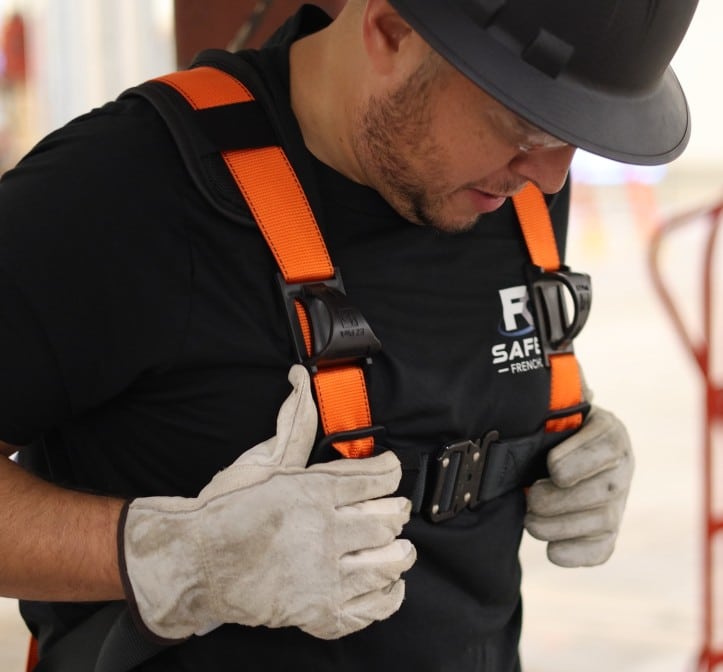
Comfort is often treated as a premium feature, but in many applications it is a practical consideration.
There is a major difference between wearing a harness for occasional maintenance work and wearing one throughout an entire shift.
Workers who spend extended periods in a harness may benefit more from features such as:
- Shoulder padding
- Back padding
- Breathable materials
- Better weight distribution
- Comfortable leg-strap design
- Greater freedom of movement
- Easy adjustment
For an occasional user, some of these features may offer limited benefit.
For a worker wearing the harness eight hours a day, they may become much more important.
The amount of time the worker spends in the harness should be part of the selection process.
Adjustment and Usability
Choose the Right Buckle and Adjustment System
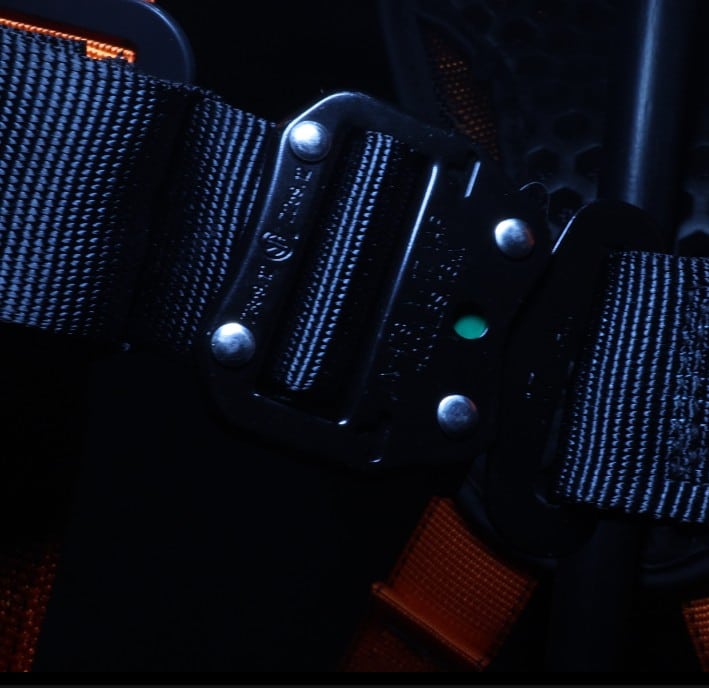
Buckle style can have a major effect on how a harness is put on, adjusted, and removed.
Common options include mating buckles, tongue-and-grommet buckles, and quick-connect buckles.
Mating buckles provide a simple and proven connection method.
Tongue-and-grommet buckles provide a familiar adjustment method and are easy to visually verify.
Quick-connect buckles can make it faster to put the harness on and take it off, which may be valuable for workers who frequently enter and leave fall-protection areas.
The best buckle style depends on the worker and the application.
Adjustment is equally important.
Depending on the harness, adjustment may be available at the torso, chest, legs, and waist. A properly selected harness should provide enough adjustment range to achieve the intended fit while allowing the worker to move normally.
The Complete PPE System
Consider the Worker’s Tools and Equipment
A harness does not operate by itself.
Workers may also be wearing or carrying:
- Tool belts
- Tool pouches
- Positioning equipment
- Lanyards
- Self-retracting lifelines
- Rescue equipment
- High-visibility clothing
- Cold-weather clothing
- Other personal protective equipment
Those items can affect harness fit, accessibility, and comfort.
For example, a worker who regularly carries tools may benefit from a harness with a compatible tool waist belt. Workers using twin-leg lanyards or SRLs may benefit from integrated lanyard parking or device-leg management.
Lanyard parking locations must not be treated as fall-arrest attachment points.
Harness selection should consider the worker’s complete PPE system rather than treating the harness as a stand-alone piece of equipment.
Sizing and Secure Adjustment
Fit Is Part of Harness Selection
Even the right harness design will not perform as intended if it does not fit the worker properly.
Sizing should account for more than just height or weight. Body proportions, adjustment range, chest-strap position, leg-strap fit, and dorsal D-ring position can all affect the final fit.
When evaluating a harness, consider:
- Whether the harness is available in the correct size
- Whether the adjustment range accommodates the worker
- Whether the chest strap can be positioned correctly
- Whether the leg straps can be adjusted securely
- Whether the dorsal D-ring remains properly positioned
- Whether the harness stays in position as the worker moves
Before entering a fall-hazard area, the worker should perform the manufacturer’s fit check and the required pre-use inspection. Make adjustments while in a safe location.
Compliance and Intended Use
Standards Are the Starting Point, Not the Entire Selection Process
Applicable OSHA regulations, ANSI/ASSP standards, and manufacturer instructions are essential considerations when selecting fall-protection equipment.
ANSI/ASSP Z359.11-2021 addresses design and performance requirements for full-body harnesses; the applicable OSHA rules govern how the complete protection system is used.
However, compliance alone does not determine which harness is best for a particular worker or application.
Two harnesses may both meet the applicable requirements while offering very different levels of padding, adjustment, attachment points, buckle styles, and job-specific functionality.
Standards establish an important baseline.
Application determines which compliant harness is the better choice.
Compare Value After Fit and Function
Don’t Pay for Features the Application Does Not Need
Price should still be part of the decision, but it should come later in the process.
Consider two workers.
The first worker performs general construction work and primarily uses a personal fall-arrest system. That worker may need a dorsal connection point, reliable adjustment, comfortable fit, and convenient lanyard management.
The second worker performs positioning work for several hours each day and regularly carries tools. That worker may benefit from hip positioning D-rings, a tool waist belt, additional support, more padding, and different hardware.
Both workers need a full-body harness.
They do not necessarily need the same full-body harness.
The more expensive model is not automatically better, and the lower-priced model is not automatically the better value.
Value comes from selecting an appropriately rated, properly fitting, and compatible harness that meets the application without unnecessary features.
10 Questions Before Purchase
A Simple Harness Selection Checklist
Before selecting a full-body harness, ask:
- What application will the harness be used for?
- What fall-protection system will it connect to?
- Which attachment points are required?
- Will work positioning be required?
- How long will the worker wear the harness each day?
- What buckle style makes sense for the worker?
- Does the worker carry tools or other equipment?
- What environmental conditions will the harness encounter?
- Does the harness properly fit the worker?
- Does it meet the applicable requirements for the application?
Once those questions have been answered, price becomes much easier to evaluate.
The Right Choice for the Work
Choose the Harness for the Work
The right full-body harness is not necessarily the most expensive model or the least expensive one.
It is the harness that matches the work being performed, integrates properly with the rest of the fall-protection system, fits the worker correctly, and provides the functionality needed for the job.
Start with the application.
Determine the attachment points, adjustment, comfort, materials, and features the worker actually needs.
Then compare price among the harnesses that meet those requirements.
That approach helps turn harness selection from a purchasing decision into a safety decision.
OSHA 29 CFR 1910.140 | OSHA 29 CFR 1926.502 | OSHA 29 CFR 1910.146
Requirements vary by application. Always follow the current equipment instructions and applicable regulations.